A 3 day full body workout trains the whole body on three days a week, with a rest day between sessions. This routine has three workouts of six or seven exercises and 17 or 18 sets, 60 to 75 minutes each. Add reps until every set reaches the top of its rep range, then add weight.
- Days
- 3 a week
- Session
- 60–75 min
- Block
- 5 weeks
- Level
- Intermediate
- Goal
- Muscle size
- Equipment
- Commercial gym
Who this routine is for
Lifters past their first months of training who want muscle size, can train three days a week, and have 60 to 75 minutes a session in a commercial gym: a barbell and rack, dumbbells, cables and machines.
It is written for an intermediate. If you are new to lifting, the week still suits you with less work in it: RIGOR gives a beginner about a quarter fewer sets a week and keeps one more rep in reserve in weeks 2 and 4. If your gym is missing a machine, the swaps keep the plan intact. With dumbbells only, use the 3-day dumbbell workout plan.
The week
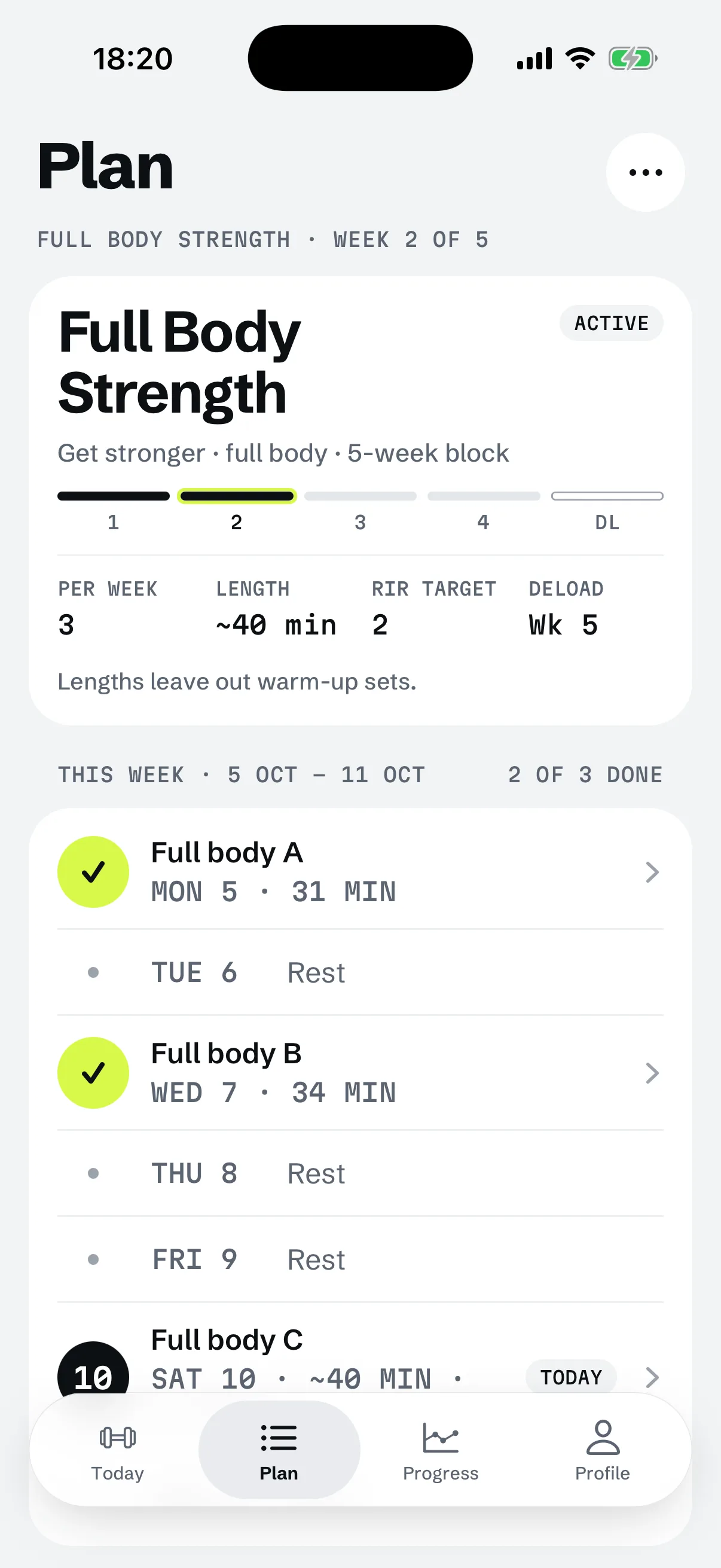
A 3 day full body workout routine is three workouts, A, B and C, on three days, or full body every other day.
- MONFull body A
- TUERest
- WEDFull body B
- THURest
- FRIFull body C
- SATRest
- SUNRest
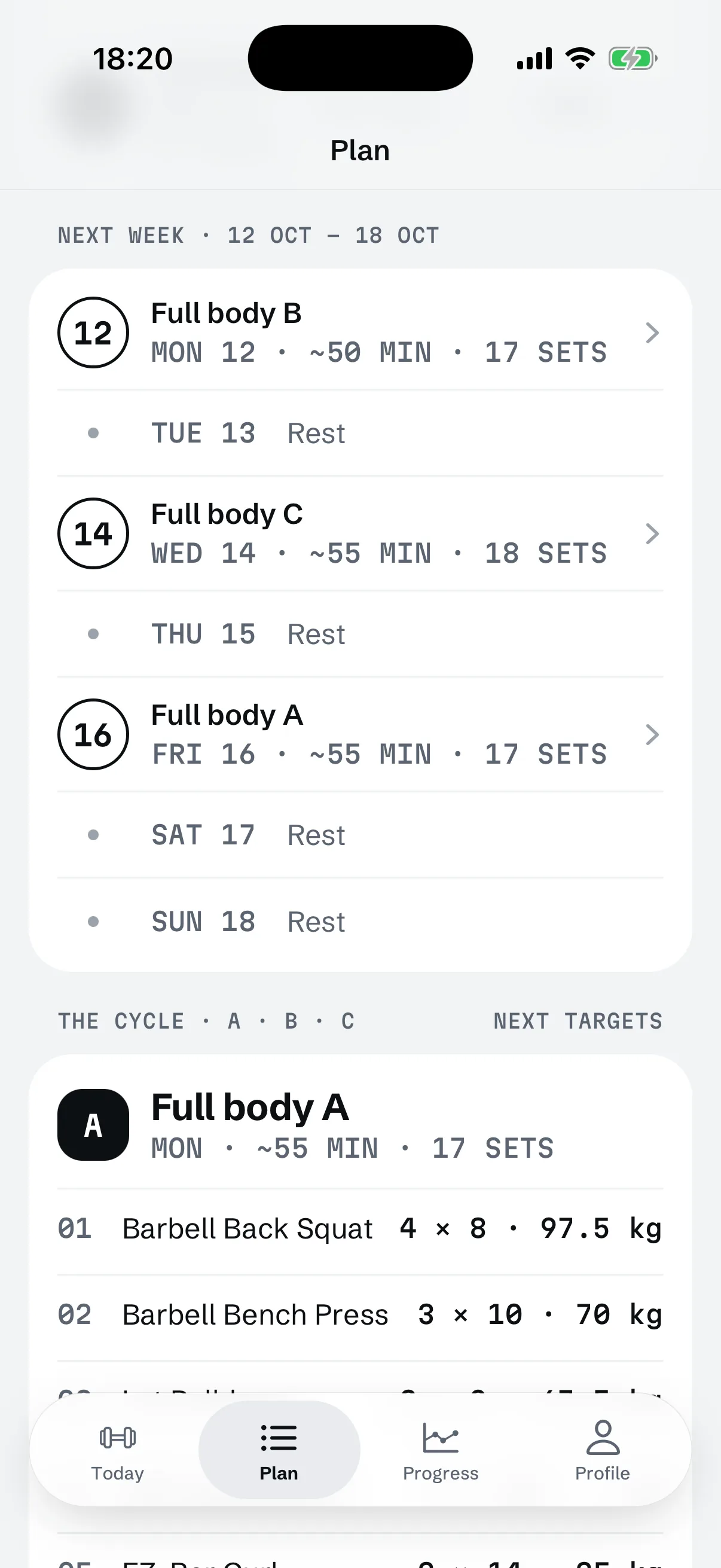
Missed a day? Do that workout on the next day you train and carry on in order. In RIGOR a workout you did not do waits for you, and nothing is marked as failed. See missed days and time off.
RIGOR is a strength training app for iPhone that builds your plan and sets every weight by rules you can read.
YOUR IPHONE

The workouts
Each row is an exercise, its working sets and rep range, and the rest between sets. "4 × 6–10" means four sets of 6 to 10 reps, all at one weight. Warm-up sets come on top and are not counted.
Full body A
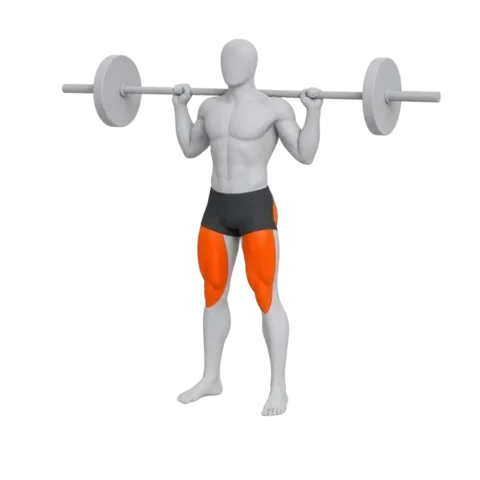
- Barbell Back Squat4 × 6–10 · REST 3:00
- Barbell Bench Press3 × 8–12 · REST 2:00
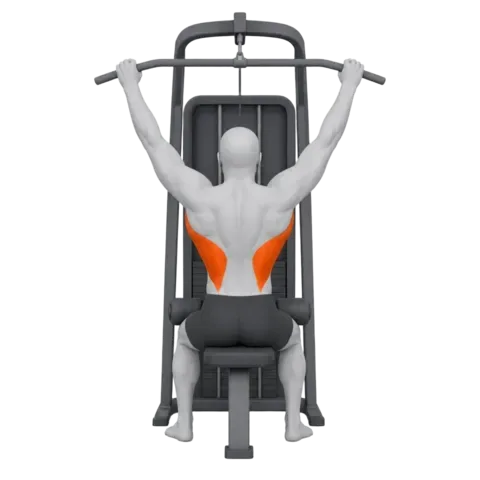
- Lat Pulldown3 × 8–12 · REST 2:00
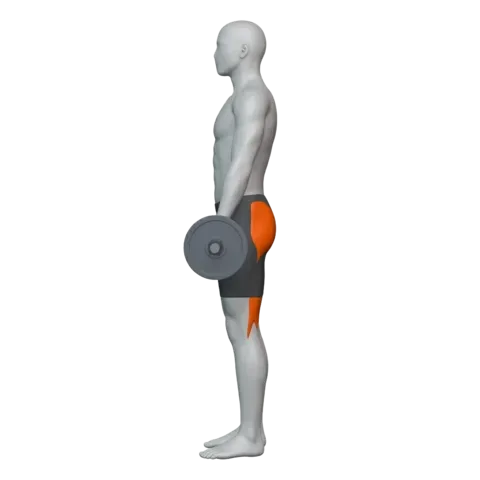
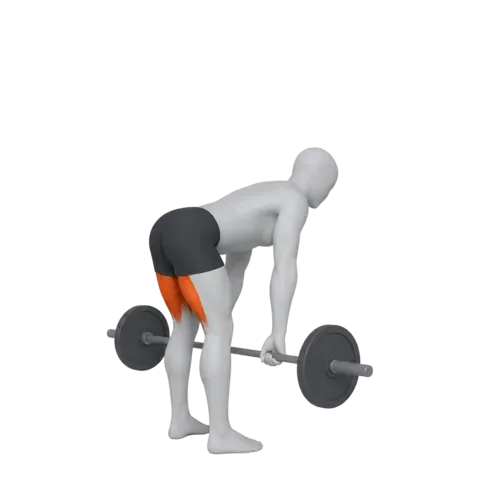
- Stiff Leg Deadlift2 × 8–12 · REST 3:00
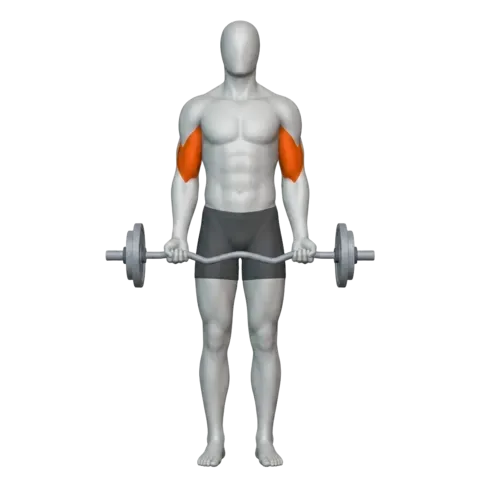
- EZ-Bar Curl3 × 10–15 · REST 1:30
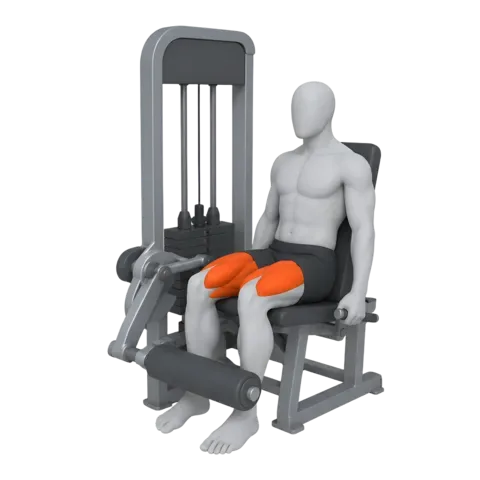
- Leg Extension2 × 10–15 · REST 1:30
Full body B
- Romanian Deadlift3 × 6–10 · REST 3:00
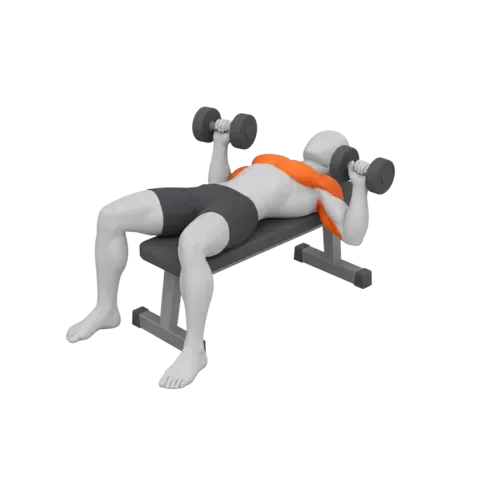
- Dumbbell Bench Press3 × 8–12 · REST 2:00
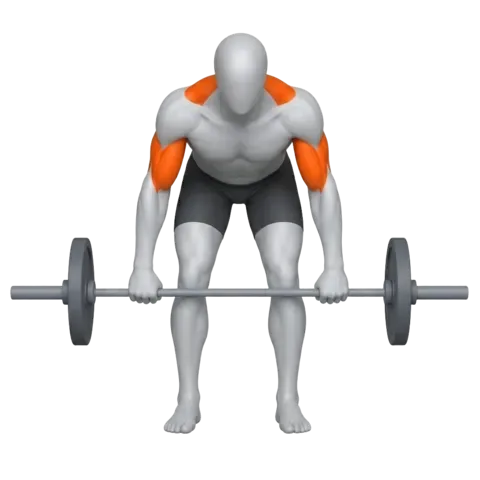
- Bent-Over Barbell Row2 × 8–12 · REST 2:00
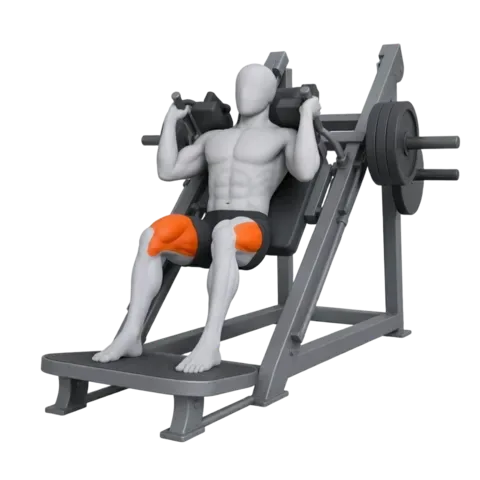
- Hack Squat3 × 8–12 · REST 3:00
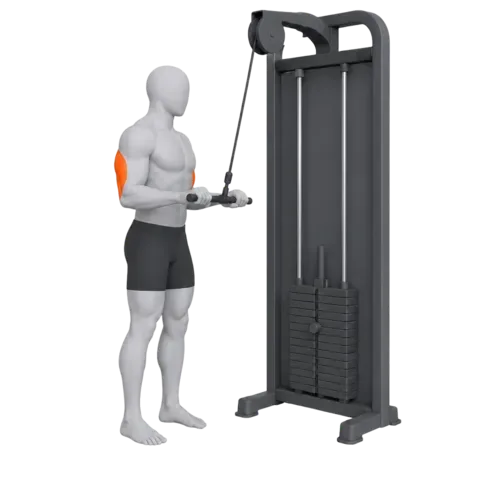
- Cable Tricep Pushdown2 × 10–15 · REST 1:30
- Cable Crunch2 × 12–20 · REST 1:00
- Lying Leg Curl2 × 10–15 · REST 1:30
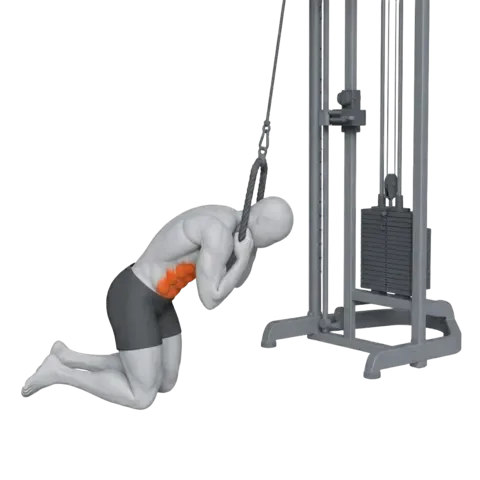
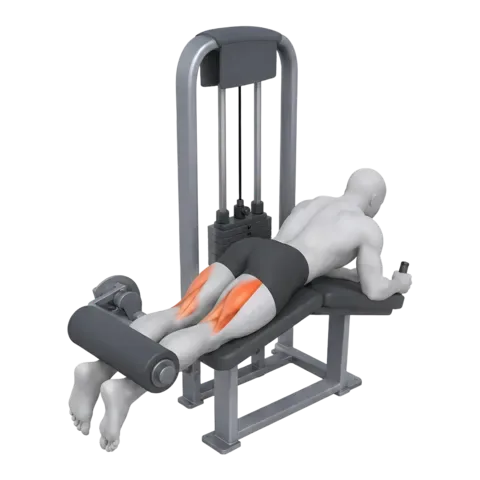
Full body C
- Barbell Back Squat4 × 6–10 · REST 3:00
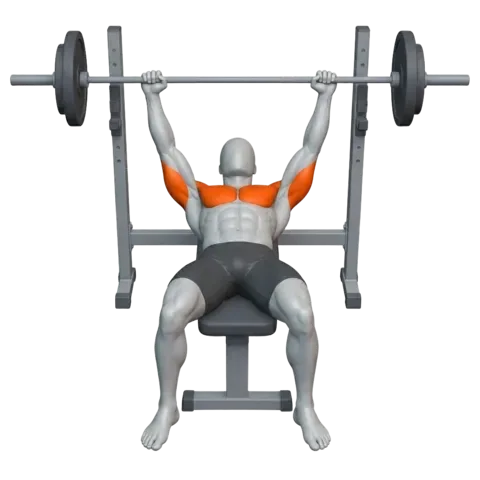
- Incline Barbell Bench Press3 × 8–12 · REST 2:00
- Close-Grip Lat Pulldown3 × 8–12 · REST 2:00
- Barbell Overhead Press3 × 8–12 · REST 2:00
- Standing Calf Raise2 × 12–20 · REST 1:30
- Dumbbell Pullover3 × 10–15 · REST 1:30
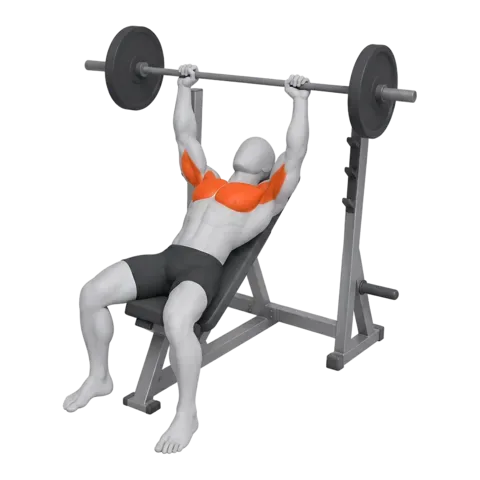
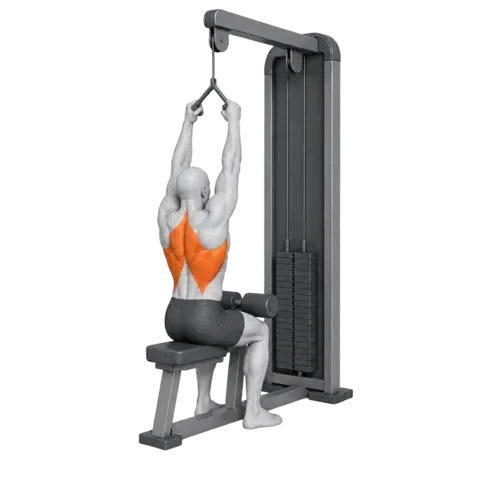
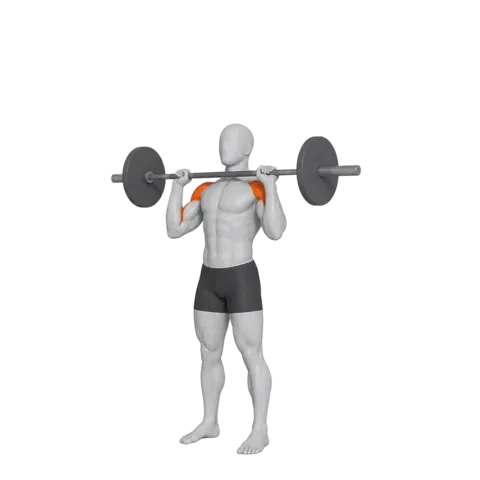
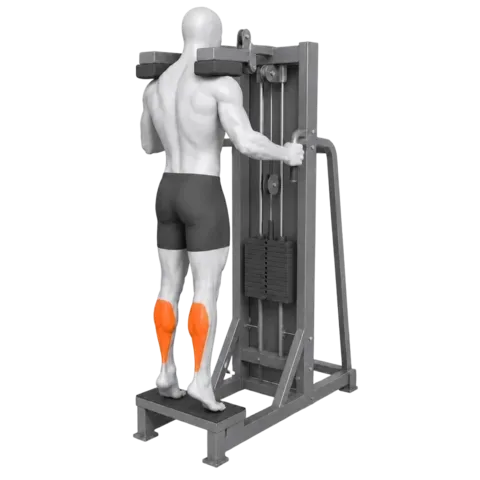
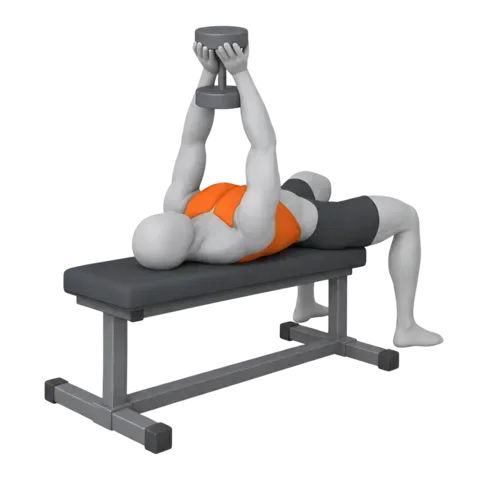
Do the exercises in the order shown and take the rests as written: three minutes on the big leg lifts, two on presses and pulls, less on the small exercises.
Why it is built this way
Each workout opens with a squat or a hip hinge, while you are fresh. A press and a pull for the upper body follow, then one more big lift and the smaller exercises. Large muscles before small ones, and lifts that move several joints before lifts that move one: that is also the order the American College of Sports Medicine recommends.
- Squat or hinge
- Press
- Pull
Training the whole body each time means legs, chest and back are worked three times a week. A 2016 review of ten studies found that training a muscle twice a week grew more muscle than once a week. It could not say whether three times beats two. What three sessions do give you is room: one missed workout never leaves your legs, chest or back untrained for the week.
The rep ranges follow the size of the lift. The first lift of the day gets 6 to 10 reps, the other big lifts 8 to 12, and the small ones 10 to 15, or 12 to 20 for calves and abs. Seventeen or eighteen sets keep a session inside 75 minutes.
How to start
Do not guess your first weights from a chart. For each exercise, pick a weight you can lift for the middle of its rep range with about three reps left on the big lifts and two on the small ones. On a squat at 6 to 10 reps, that is 8 reps with a weight you could lift 11 times. Your first session sets the starting point, and a guess that was far off is corrected after one session.
The effort rises through the block. On the big lifts, leave about three reps in week 1, two in weeks 2 and 3, and one in week 4. The small exercises run one rep closer.
Warm up before each big lift. Before a 60 kg squat the sets are 20, 25, 35 and 47.5 kg; before 135 lb they are 45, 55, 80 and 110 lb. A small exercise gets one set at 60% × 8, and none once its muscle is already warm. Warm-up sets never count as working sets.
- Warm up20253547.5
The empty bar × 10, then about 40% × 5, 60% × 5 and 80% × 3 of your working weight.
- Stop short
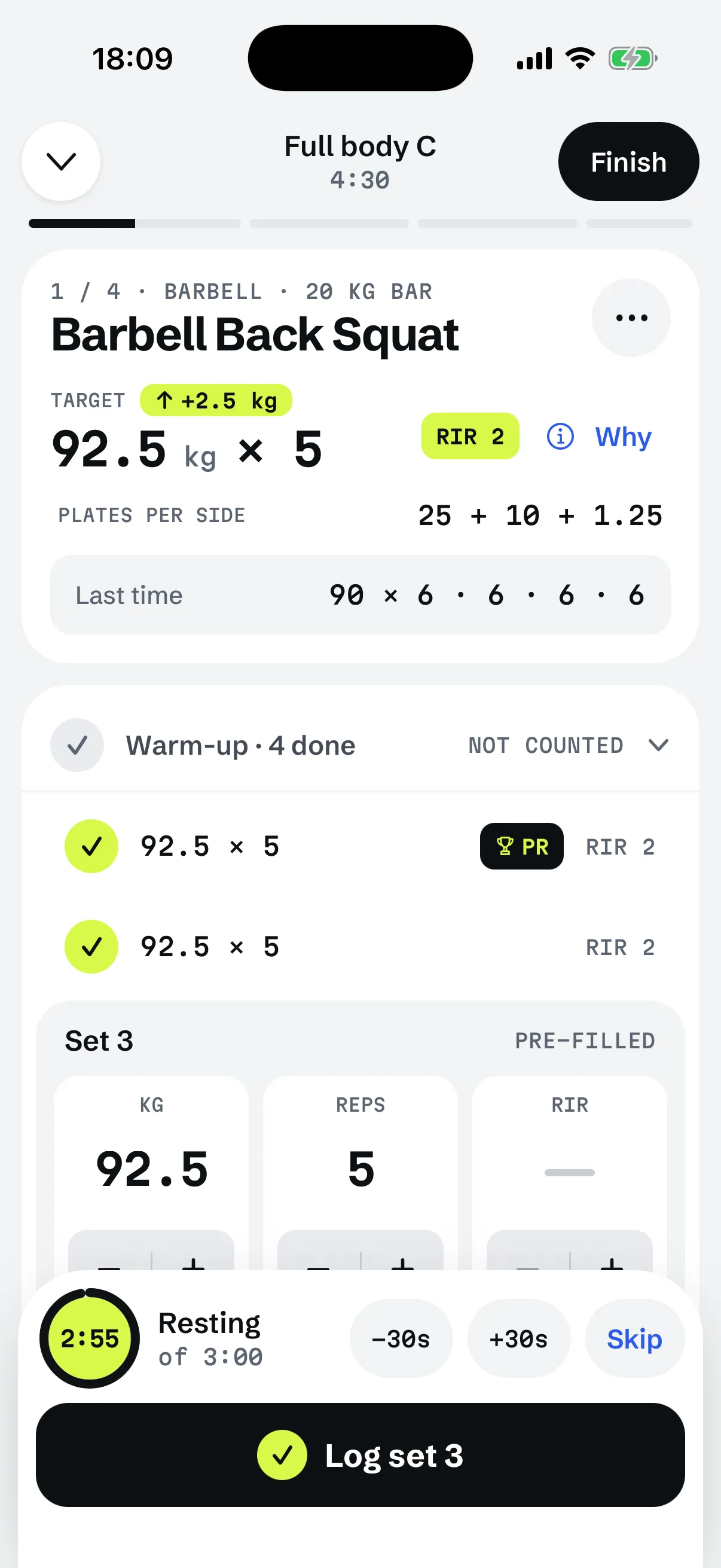
End each set with the planned reps left: about three on a big lift in week 1.
- Log what you did
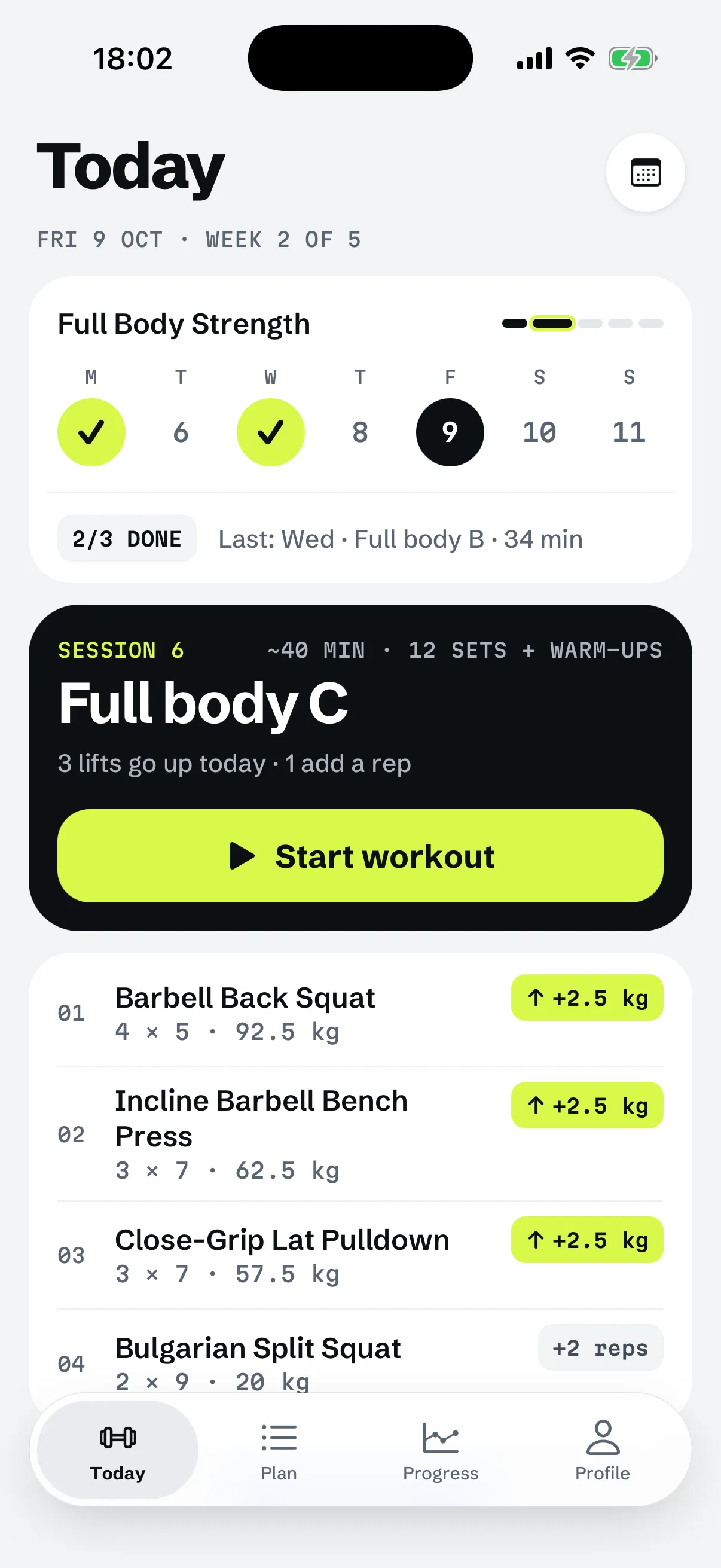
Log the weight and reps of every set. They set next time's target.
How it progresses
Every exercise has a rep range. Keep the weight and add reps until every set reaches the top of the range, then add weight. The method is called double progression, and it works the same on every exercise here.
TOP OF THE RANGE8 REPS · BOTTOM
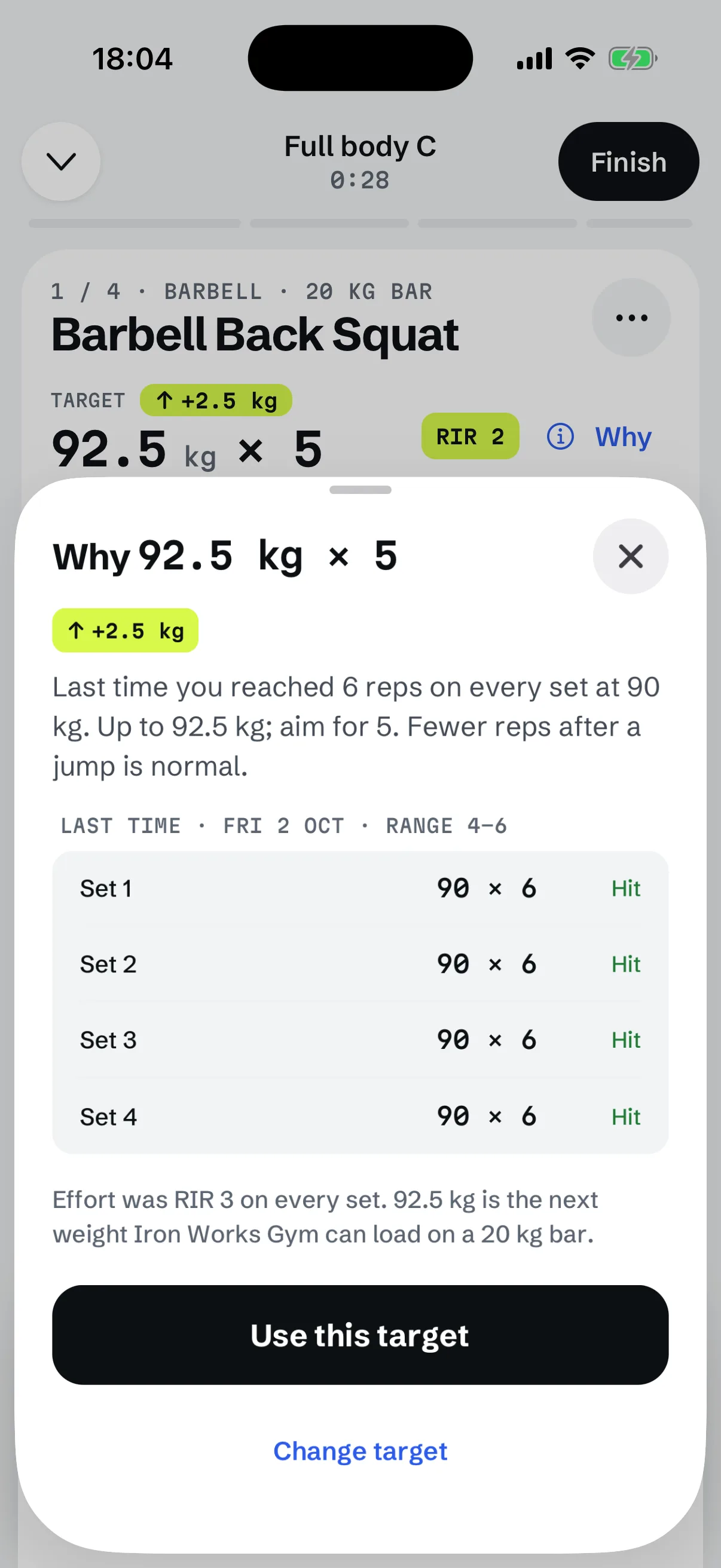
- All sets at the top of the range, at about the planned effort: the weight goes up.
- Not there yet: same weight, one more rep per set.
- Below the range twice in a row at the same weight: down 10%.
Only that exercise changes. How weights go up shows each case as the app words it.
If your gym lacks something
Swap an exercise for one that trains the same muscles with the equipment you have.
| Exercise | Swap for |
|---|---|
| Barbell Back Squat | Hack Squat, Leg Press or Smith Machine Squat |
| Barbell Bench Press | Dumbbell Bench Press or Machine Chest Press |
| Lat Pulldown | Pull-Up or Machine-Assisted Pull-Up |
| Romanian Deadlift | Dumbbell Romanian Deadlift or Cable Pull-Through |
| Bent-Over Barbell Row | Seated Cable Row or T-Bar Row |
| Barbell Overhead Press | Dumbbell Shoulder Press or Machine Shoulder Press |
A swapped exercise starts its own history. It never takes over the other lift's weight, so treat its first session as in "How to start": pick a weight for the rep range and log it. In RIGOR, swapping an exercise suggests replacements from the equipment your gym has.
How long to run it
A block is five weeks: four training weeks, then a lighter fifth, the deload week. In it you do half the sets, with about 10% less weight, at the bottom of each rep range and with more reps left in reserve. The exercises stay the same.
- WEEK1
- WEEK2
- WEEK3
- WEEK4
- DELOAD5
The deload week is never used to judge progress: the next block starts from your last normal week. A 2023 consensus of strength and physique coaches defines a deload in the same terms, a period of reduced training stress to recover and prepare for the training that follows.
Run the block again with your new weights for as long as your reps or weights keep going up on most lifts. When a lift falls below its range two sessions running, the rule takes 10% off that lift and you climb again. Change the routine when your week changes, not because a block ended: with four days free, to the 4-day upper lower split. See the best workout split by days.
Get this program built for your gym
Questions
Is a 3 day full body workout enough?
Yes, for most people who lift to build muscle. Each workout trains legs, chest and back, so the big muscles are worked three times a week. A 2016 review found that twice a week grew more muscle than once.
What days should I train?
Any three days with a rest day between sessions. Monday, Wednesday and Friday is the usual week; Tuesday, Thursday and Saturday works as well.
What weight should I start with?
One you can lift for the middle of the exercise's rep range with about three reps left on the big lifts and two on the small ones. The first session sets your starting point.
How do I progress?
Keep the weight and add a rep to each set from one session to the next. When every set reaches the top of the rep range, add the smallest weight your gym can make.
3 day full body vs 4 day upper lower: which is better?
Neither is better on its own. Three full-body days fit a week with three free days and train each big muscle three times. Four upper/lower days give each half of the body two days of its own. Pick the week you will keep.
How long should I run it?
One block is five weeks: four training weeks and a lighter deload week. Repeat the block with your new weights for as long as your reps or weights keep going up.