A 4 day upper lower split trains the upper body on two days a week and the lower body on two. This workout plan has four workouts of four to six exercises and 12 to 15 sets, built for 45 to 60 minutes a session. Add reps until every set reaches the top of its rep range, then add weight.
- Days
- 4 a week
- Session
- 45–60 min
- Block
- 4 weeks
- Level
- Beginner
- Goal
- Size and strength
- Equipment
- Commercial gym
Who this 4 day upper lower split is for
Beginners who want strength and muscle size, can train four days a week, and have 45 to 60 minutes a session in a commercial gym: dumbbells, kettlebells, an EZ bar, cables and machines.
An upper lower split is good for beginners who can keep four days. Four is a choice, not a need: the American College of Sports Medicine recommends two to three days a week for novices.
Weighing three, four or six days? A 2024 review of 14 studies found that split and full-body routines built similar strength and muscle when the weekly work was equal, so choose the best workout split by the days you can keep. With three, use the 3 day full body workout; with six, the 6 day push pull legs routine.
The week
A 4 day upper lower split has four workouts: Upper A, Lower A, Upper B and Lower B. Monday, Tuesday, Thursday and Friday is the usual week.
- MONUpper A
- TUELower A
- WEDRest
- THUUpper B
- FRILower B
- SATRest
- SUNRest
Missed a day? Do that workout on the next day you train and carry on in order. In RIGOR it waits for you: see missed days and time off.
RIGOR is a strength training app for iPhone that builds your plan and sets every weight by rules you can read.
YOUR IPHONE

The workouts
Each row is an exercise, its working sets and rep range, and the rest between sets. "4 × 5–8" means four sets of 5 to 8 reps, all at one weight.
Upper A
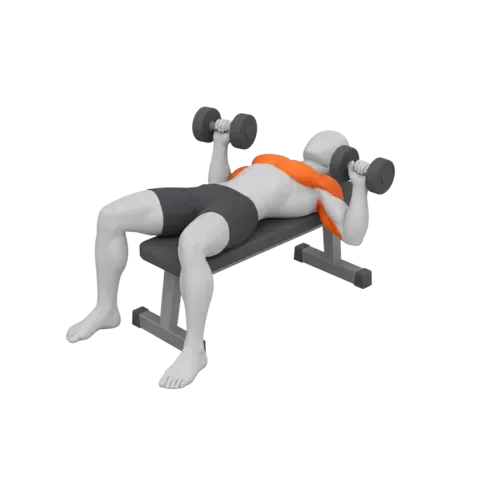
- Dumbbell Bench Press4 × 5–8 · REST 2:00
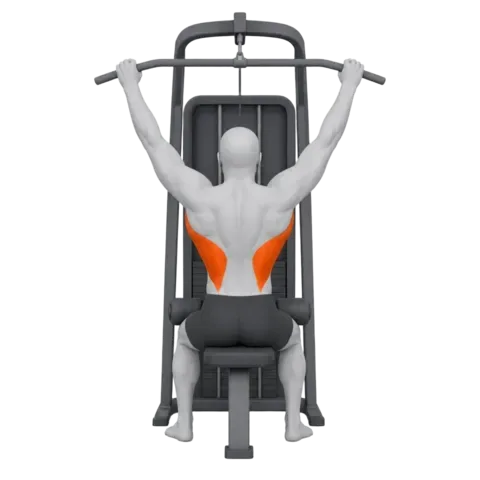
- Lat Pulldown3 × 8–12 · REST 2:00
- EZ-Bar Curl2 × 10–15 · REST 1:30
- Dumbbell Lateral Raise2 × 12–20 · REST 1:30
- Machine Chest Fly2 × 10–15 · REST 1:30
- Crunch2 × 12–20 · REST 1:00
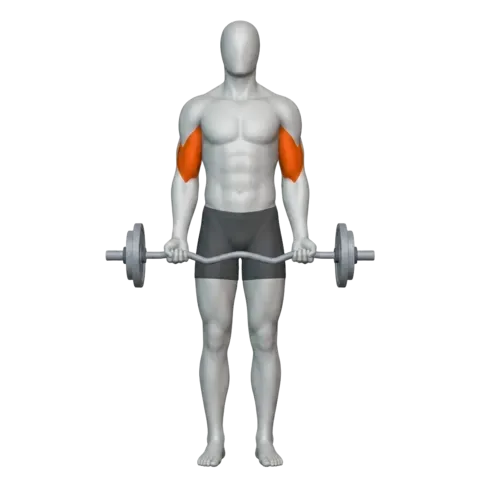
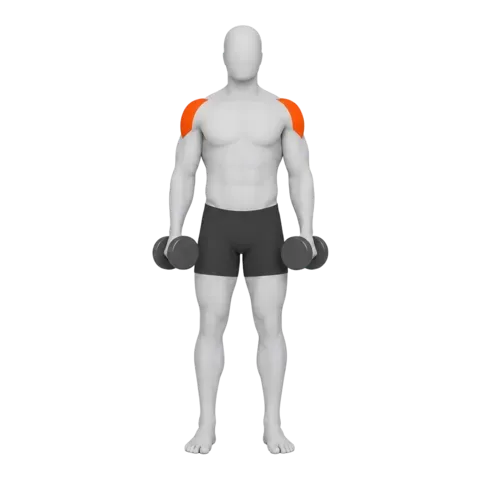
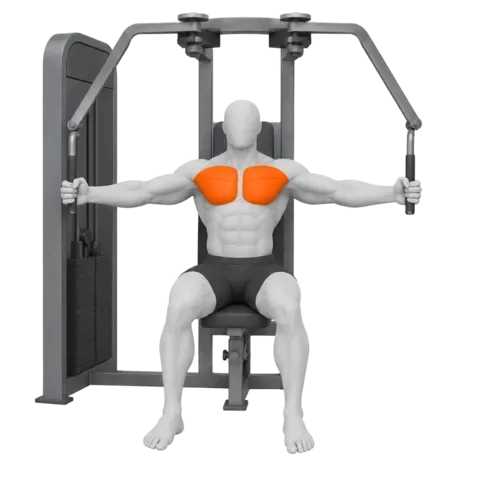
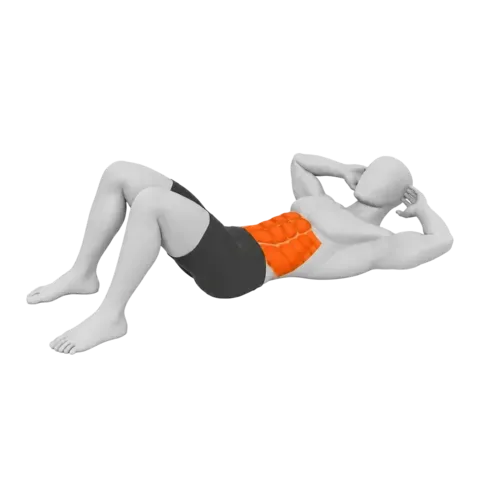
Lower A
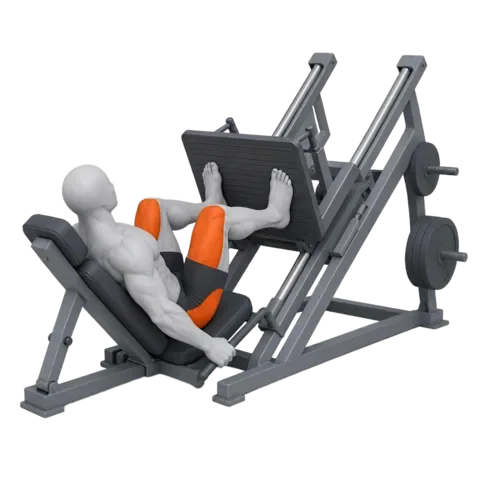
- Leg Press4 × 5–8 · REST 3:00
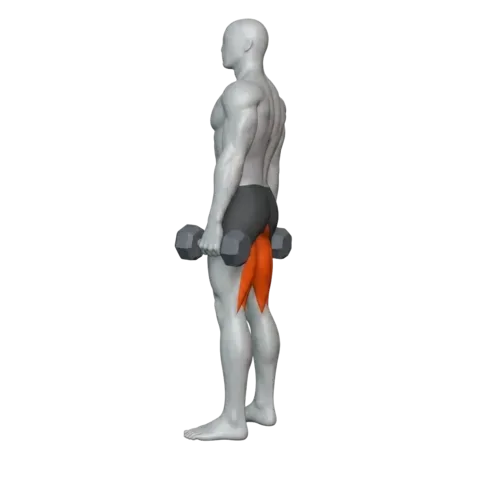
- Dumbbell Romanian Deadlift2 × 8–12 · REST 3:00
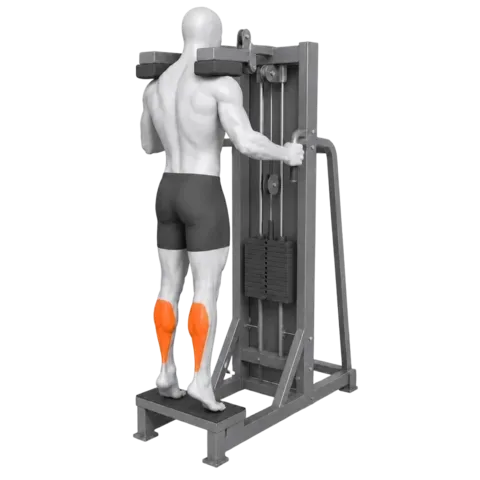
- Standing Calf Raise3 × 12–20 · REST 1:30
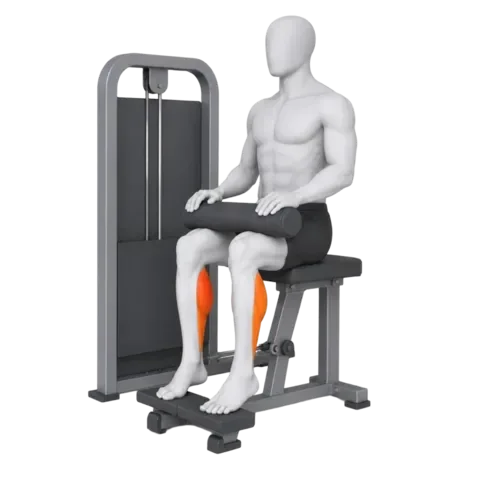
- Seated Calf Raise3 × 12–20 · REST 1:30
Upper B
- Dumbbell Bench Press4 × 5–8 · REST 2:00
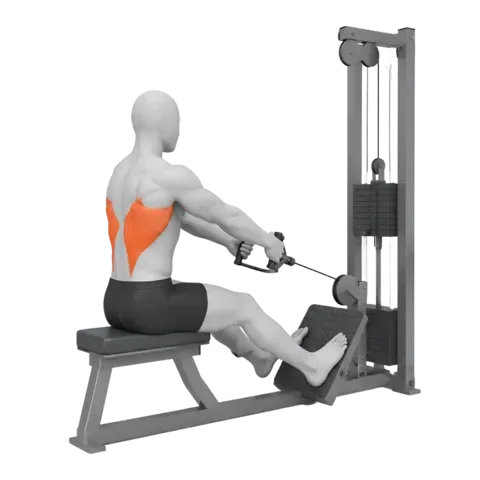
- Seated Cable Row3 × 8–12 · REST 2:00
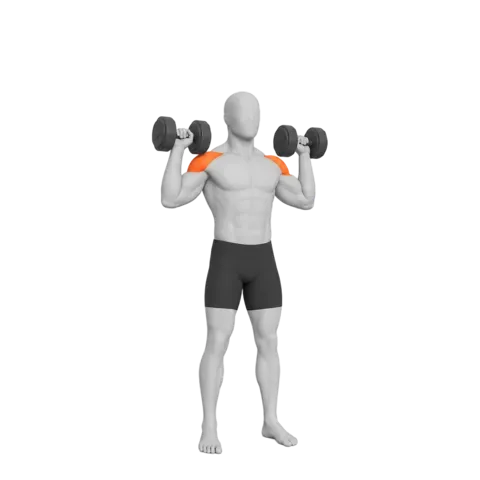
- Dumbbell Shoulder Press2 × 8–12 · REST 2:00
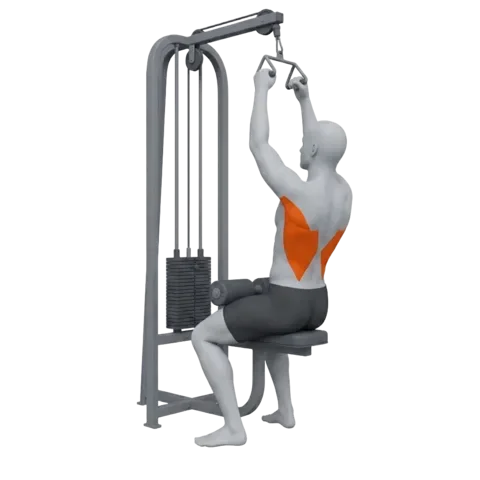
- V-Bar Lat Pulldown3 × 8–12 · REST 2:00
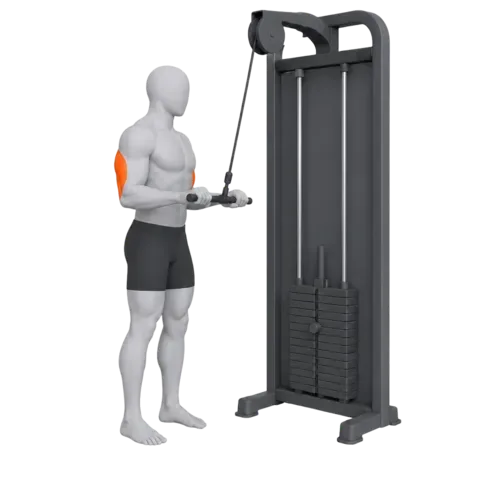
- Cable Tricep Pushdown2 × 10–15 · REST 1:30
Lower B
- Dumbbell Romanian Deadlift3 × 5–8 · REST 3:00
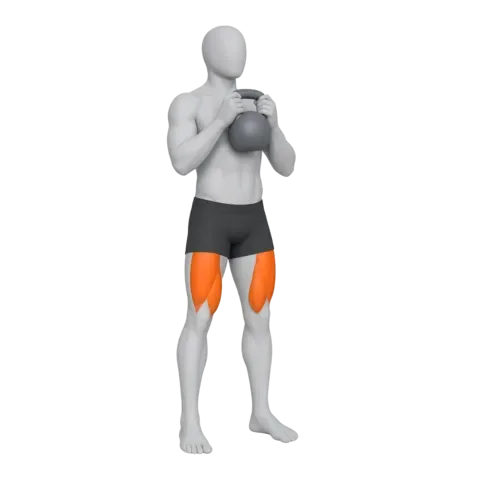
- Goblet Squat3 × 8–12 · REST 3:00
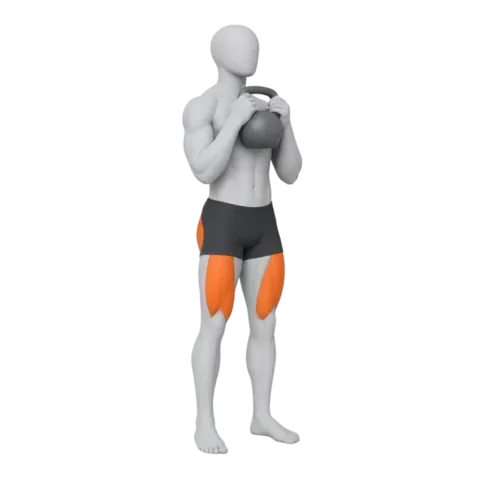
- Kettlebell Reverse Lunge3 × 8–12 · REST 3:00
- Machine Seated Crunch3 × 12–20 · REST 1:00
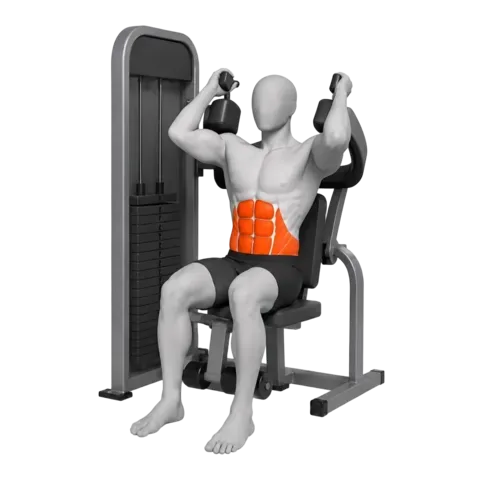
Do the exercises in the order shown and take the rests as written.
Why it is built this way
Each upper workout opens with a press, then a pull, while you are fresh. The lower workouts open with the leg press on one day and the Romanian deadlift on the other. Large muscles before small ones, and lifts that move several joints before lifts that move one: that is also the order the American College of Sports Medicine recommends.
- Press
- Pull
- Arms and shoulders
Splitting the week in two means each half of the body is trained twice a week. A 2016 review of ten studies found that training a muscle twice a week grew more muscle than once a week. It could not say whether three times beats two.
There is no barbell squat and no barbell bench press. RIGOR gives a beginner the beginner-level version of each movement where the gym has one: here the dumbbell bench press, the leg press, the goblet squat and the dumbbell Romanian deadlift. Twelve to fifteen sets with the rests above come to roughly 40 minutes before warm-up sets, inside the 45 to 60 the plan allows.
Is this a powerbuilding program?
It is the plan RIGOR builds for its "both" goal, strength and size in one week. It is not a named powerbuilding programme. The first lift of the day gets 5 to 8 reps, the other big lifts 8 to 12, the curl, the fly and the pushdown 10 to 15, and lateral raises, calves and abs 12 to 20. The strength goal asks 4 to 6 reps on the main lift and 6 to 8 on the next, the size goal 6 to 10 and 8 to 12. RIGOR builds it for a three-day or six-day week too.
How to start
For each exercise, pick a weight you can lift for the middle of its rep range with about three reps left on the big lifts and two on the small ones. On a dumbbell bench press at 5 to 8 reps, that is 6 reps with a weight you could lift 9 times. Your first session sets the starting point, and a guess that was far off is corrected after one session.
On the big lifts, leave about three reps in weeks 1 and 2 and two in weeks 3 and 4. The small exercises run one rep closer.
Warm up before each big lift with three lighter sets: about 40% of the working weight × 5, 60% × 5 and 80% × 3. Before a bench press with 20 kg dumbbells that is 8, 12 and 16 kg; before 50 lb dumbbells, 20, 30 and 40 lb. The warm up sets calculator uses the same shares for a barbell lift. Warm-up sets never count as working sets.
How it progresses
Every exercise has a rep range. Keep the weight and add reps until every set reaches the top of the range, then add weight. The method is called double progression, and it works the same on every exercise here.
TOP OF THE RANGE8 REPS · BOTTOM
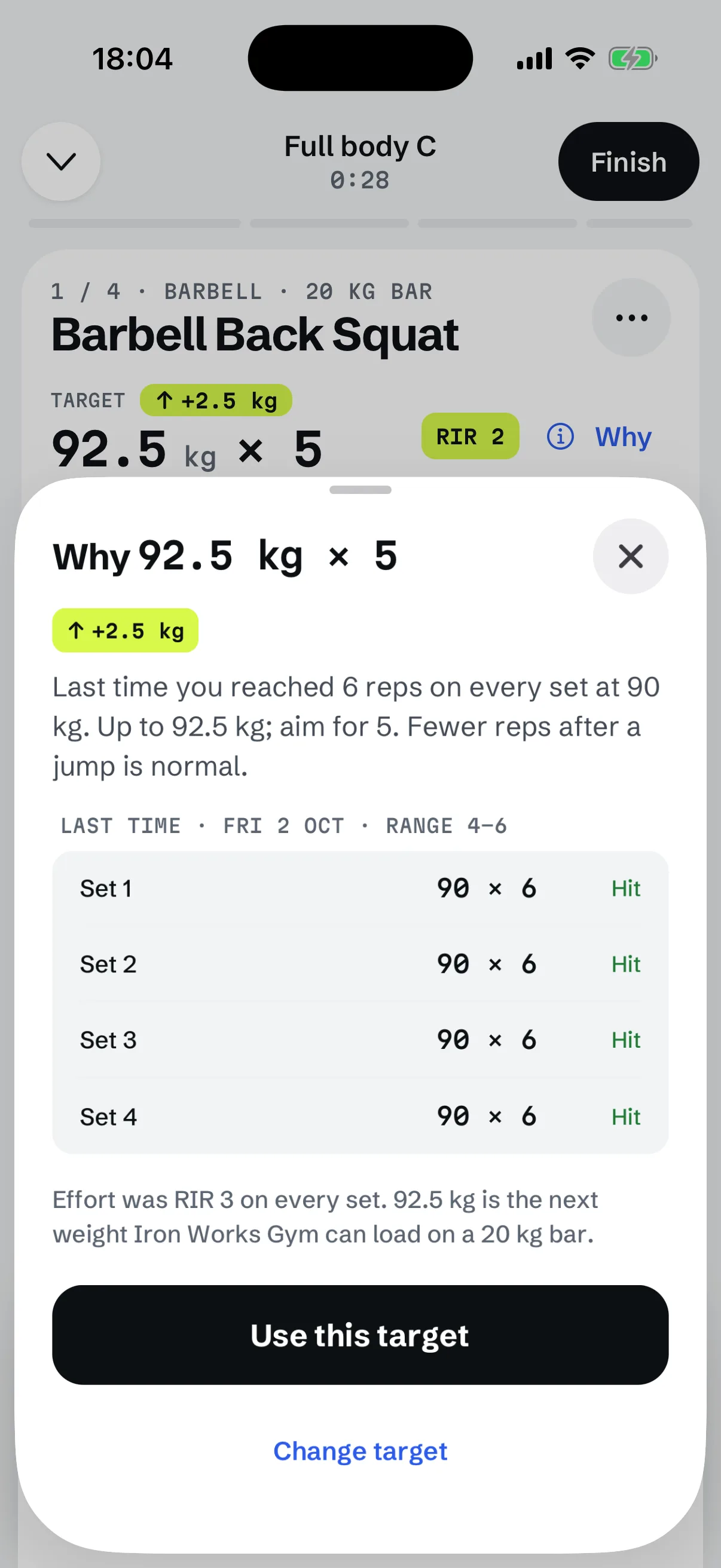
- All sets at the top of the range, at about the planned effort: the weight goes up.
- Not there yet: same weight, one more rep per set.
- Below the range twice in a row at the same weight: down 10%.
Only that exercise changes. The sheet shown is a barbell squat's; every lift here is judged the same way.
When the next pair of dumbbells would drop you below the rep range, RIGOR asks for extra reps first: up to 10 a set on the dumbbell bench press. How weights go up shows each case.
If your gym lacks something
Swap an exercise for one that trains the same muscles with the equipment you have.
| Exercise | Swap for |
|---|---|
| Leg Press | Hack Squat or Dumbbell Squat |
| Lat Pulldown | Machine-Assisted Pull-Up or Band-Assisted Pull-Up |
| Seated Cable Row | Chest-Supported Dumbbell Row or Kneeling Cable Row |
| Machine Chest Fly | Cable Fly or Dumbbell Fly |
| Goblet Squat | Dumbbell Squat or Dumbbell Sumo Squat |
| Standing Calf Raise | Smith Machine Calf Raise or Dumbbell Calf Raise |
A swapped exercise starts its own history and never takes over the other lift's weight: treat its first session as in "How to start". In RIGOR, swapping an exercise suggests replacements from the equipment your gym has.
How long to run it
Run it for as long as your reps or weights keep going up on most lifts. One block is four weeks, with no deload week: RIGOR leaves the lighter week off for a beginner and adds it, as a fifth week, for intermediate and advanced lifters.
- WEEK1
- WEEK2
- WEEK3
- WEEK4
When every workout of the four weeks is logged, repeat the block with your new weights. When a lift falls below its rep range two sessions running at the same weight, the rule takes 10% off that lift and you climb again.
Want the lighter week anyway? See deload weeks.
Get this plan built for your gym
Questions
What is an upper lower split?
An upper lower split divides the week into upper-body workouts (chest, back, shoulders, arms) and lower-body workouts (legs, glutes, calves). Run over four days, it trains each half of the body twice a week.
Is an upper lower split good for beginners?
Yes, for a beginner who can keep four days a week. The American College of Sports Medicine recommends two to three days a week for novices, so three full-body days are enough if four are too many.
What days should I train on a 4 day upper lower split?
Monday, Tuesday, Thursday and Friday is the usual week: upper, lower, a rest day, upper, lower. Any four days work as long as the order stays the same.
Is upper lower better than PPL?
No. Both train each big muscle twice a week: an upper lower split in four days, a six-day push pull legs routine in six. Pick the one whose days you can keep.
Can I do a powerbuilding program in 3 days a week?
Yes, in RIGOR. Choose the strength and size goal with three days and the app builds a full-body plan, the structure it recommends for three days. This four-day plan is the same goal on an upper/lower split.
How do I progress?
Keep the weight and add a rep to each set from one session to the next. When every set reaches the top of the rep range, add the smallest weight your gym can make.