A superset is two exercises done back to back, with rest only after the pair. In RIGOR you pair an exercise with the next one, the app alternates their sets, and the rest timer starts after each round. Pairing opposing muscles, such as a push and a pull, let lifters complete more reps in studies.
What are supersets in the gym?
A superset is two exercises done back to back: one set of the first, one set of the second, and only then a rest. That pair is one round, and you repeat it for the planned number of sets. A superset is a way of ordering sets. It adds no new exercise and changes no weight.
The gym terms glossary defines it in a line. This page is the full answer, with the rule RIGOR follows. RIGOR is the app behind this guide.
How do supersets work in RIGOR?
You make the superset yourself. RIGOR's plan generator never prescribes supersets, so a plan arrives as straight sets. In a workout, the menu of an exercise offers "Superset with" the next exercise in the list, described as "Alternate sets, rest after each round". The same menu has "Leave superset".
Once two exercises are paired, the app labels them A1 and A2 and moves from one to the other as you log. The sets go A1, A2, A1, A2. Each pair after the first takes the next letter, B1 and B2, and so on.
The rest follows one rule. There is no rest after A1; the rest timer starts when A2 of the round is logged, and it runs for that exercise's rest. The estimate that sets the workout's length uses a 15 second gap between the two lifts of a round. That gap is a planning number, not a timer: the live timer starts only after the round.
| Part | Rule |
|---|---|
| Who makes it | You do. The generator never prescribes one |
| Order of sets | A1, A2, A1, A2, round by round |
| Rounds | The largest set count among the paired exercises |
| Gap between the two lifts | 15 seconds in the time estimate |
| Rest | After the round only, the rest of the last lift in that round |
| Uneven set counts | The exercise with more sets finishes its extra sets alone, with its own rest after each |
| Transition into the pair | 60 seconds, or 90 seconds when the first lift is a barbell exercise |
RIGOR is a strength training app for iPhone that builds your plan and sets every weight by rules you can read.
YOUR IPHONE

How much time does a superset save?
In RIGOR's estimate, a lot of the saving is the rests you skip. Take a Barbell Bench Press and a Seated Cable Row, 3 sets each. Both are upper-body compounds, so each rests 120 seconds by default (a rep range that tops out above 6 reps), and the estimate counts 40 seconds for a set. This leaves warm-ups out.
That is 375 seconds less. Straight sets hold five rests and a transition; the superset holds two rests, because the rest after the last round is not counted, and adds three 15 second gaps. The sum agrees: 5 × 120 + 60 = 660, against 2 × 120 + 3 × 15 = 285, and 660 − 285 = 375.
Two cautions about that number. It is an estimate of the plan, not a measurement of a gym. And the saving comes with a cost: you rest once between two sets of different muscles, so the second lift may start before the first lift's muscles have recovered. The rest between sets guide has the research on how rest affects reps.
Which lifts pair well in a superset?
Pair a push with a pull, or an upper lift with a lower one, at one station. The pair works when the second lift does not need the muscle the first one tired, and when you do not walk across the gym or change plates in between.
| Station | Pair | Why it works |
|---|---|---|
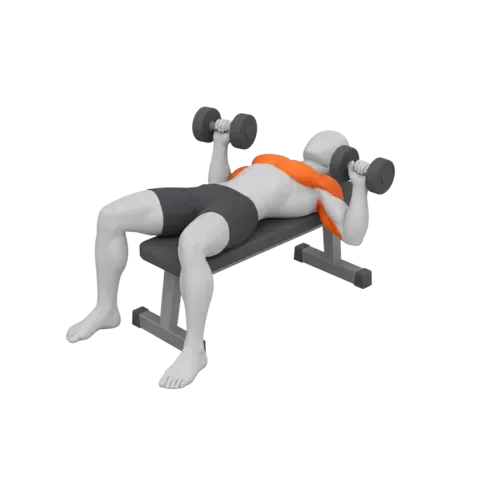
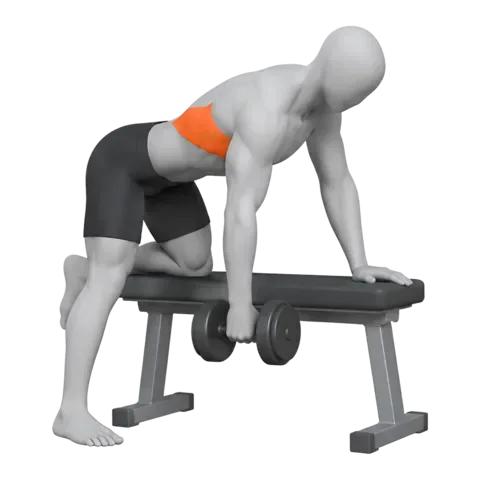
| One flat bench and dumbbells | Dumbbell Bench Press, Single-Arm Dumbbell Row | Push and pull. The bench and the dumbbell rack stay put |
| A pair of light dumbbells | Dumbbell Bicep Curl, Dumbbell Lateral Raise | Arms and shoulders with the same dumbbells, no setup between |
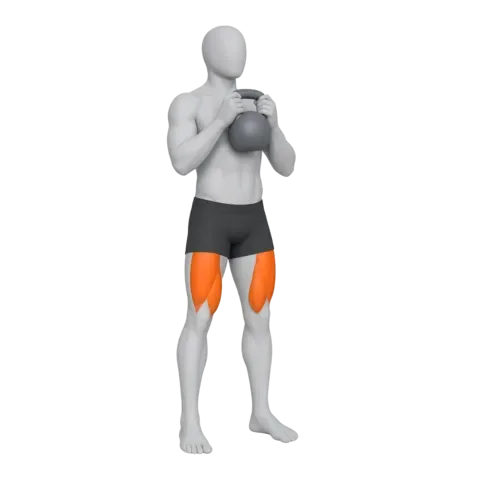
| One dumbbell and floor space | Goblet Squat, Push-Up | Legs and chest. One dumbbell, no bench |
| A cable stack | Cable Tricep Pushdown, Cable Crunch | Arms and abs on the same stack. Change the attachment and keep your place |
| Two machines side by side | Leg Extension, Lying Leg Curl | Front and back of the thigh. Only worth it when both are free |
Avoid two barbell lifts at one rack. Each needs its own plates, so changing the bar between lifts takes back the time the superset saves. If you must use a barbell, pair it with a lift that has no weight to load, such as a cable or a bodyweight lift.
Pairing two lifts for the same muscle is a different thing, and it is harder. The 2025 meta-analysis below found that pairs of similar movements lowered the volume you could lift. For picking which lifts to pair, the compound vs isolation guide explains what separates a main lift from an accessory.
What supersets well with bench press?
A pull. A row or a pulldown works the opposite side of the body, so your chest and triceps rest while your back works. With a barbell bench press, a Seated Cable Row or a Lat Pulldown is the easier pair: the barbell stays loaded on the rack and nothing needs changing. With a Dumbbell Bench Press, a Single-Arm Dumbbell Row on the same bench holds one station.
Put the lift that needs the longer rest second, because the rest after a round is the rest of its last lift. In a RIGOR superset, A1 is whichever exercise comes first in your list, and the pairing follows your exercise order.
Are supersets good for muscle building?
They build muscle about as well as the same work in straight sets, in the studies reviewed. A 2025 systematic review and meta-analysis pooled 19 studies with 313 participants. Compared with traditional sets, supersets matched them for total repetitions and volume load, and shortened the session. Long-term gains in maximal strength, strength endurance and muscle size were similar. Supersets also brought higher blood lactate, a higher energy cost and a higher perceived exertion. Pairs of opposing muscles allowed more repetitions, while pairs of similar movements lowered the volume load (Zhang 2025).
A 2025 narrative review reaches the same place: superset programs delivered similar adaptations in a more time-efficient manner, though the literature is heterogeneous. It adds that traditional sets produced greater power output (Mang 2025).
One 2017 crossover trial had 14 male participants do traditional, superset and tri-set sessions. The superset and tri-set sessions raised blood lactate more, and creatine kinase was higher 24 hours later. A countermovement jump was still below baseline after them, though it had recovered after traditional sets. The authors concluded that supersets can improve efficiency, but athletes may need extra recovery afterwards (Weakley 2017).
How many supersets per workout?
No study or rule here sets a number. RIGOR sets none either: it never prescribes a superset, so the count is yours. A sensible limit is how much of the session you want to run without a full rest. The research above found supersets felt harder, so a workout of supersets throughout is more demanding than the same sets in a row.
A simple way to start is one pair near the end of a workout, on lifts with a light load. Keep the heavy first lift of the day as straight sets with full rest: the rep ranges guide shows why those sets sit in a narrower, heavier range. The 3 day dumbbell program lists straight sets, and its dumbbell lifts pair at a bench as in the table above.
When does this not apply?
RIGOR runs the superset for you
Questions
What is an example of a superset?
A set of dumbbell bench press, then straight away a set of single-arm dumbbell row, then your rest. That is one round. Repeat for the planned number of rounds.
Are supersets killing my gains?
Not in the research cited here. A 2025 meta-analysis of 19 studies found long-term gains in strength and muscle size similar to traditional sets. Supersets did feel harder and raised blood lactate.
Does RIGOR put supersets in my plan?
No. RIGOR's plan generator never prescribes supersets or other techniques. You make a superset yourself, in the workout, from the menu of an exercise.
How do I leave a superset in RIGOR?
Open the exercise's menu and choose Leave superset. The exercises go back to straight sets, each with its own rest.