A compound exercise moves two or more joints, like a squat or a row; an isolation exercise moves one, like a curl. Do compounds first and give them the longest rests. Trials find similar whole-muscle growth from either, so isolation work is for the parts of a muscle that compounds miss.
What are compound vs isolation exercises?
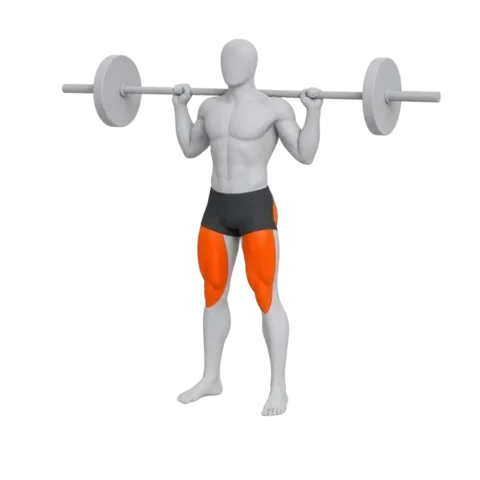
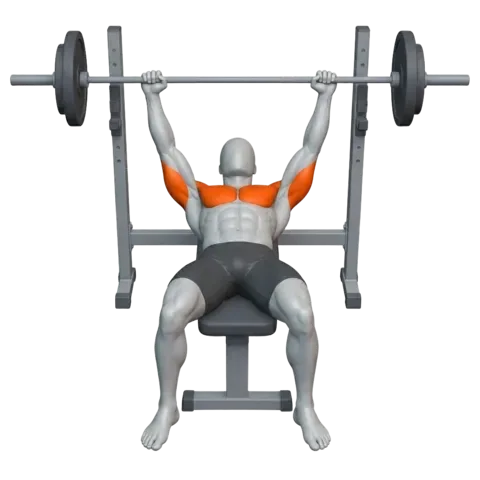
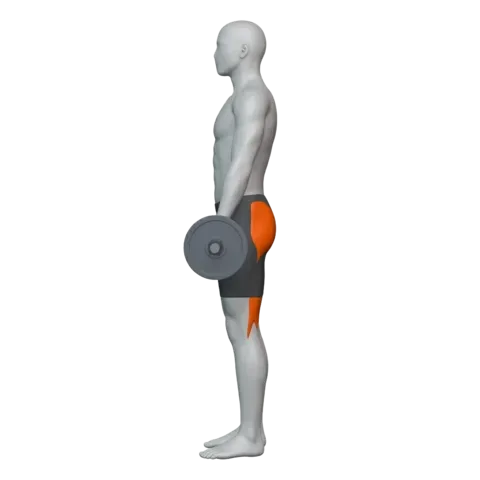
A compound exercise moves two or more joints and trains several muscles at once: a squat moves the hip and the knee, a bench press the shoulder and the elbow. An isolation exercise moves one joint and aims at one muscle: a curl moves the elbow, a calf raise the ankle. That is the whole meaning of a compound lift, and of its opposite.
A plan treats them differently because they ask different things of you. A compound lift is heavy, takes several muscles and tires you more, so it gets the most sets and the longest rests. An isolation lift is lighter and tires one muscle, so it gets fewer sets, shorter rests and almost no warm-up.
Compound exercises list: which lifts cover a full body?
Four movements cover the body: squat, hinge, push and pull. One compound from each makes a full-body day. These are lifts from RIGOR's published plans, and the plan builder swaps in whatever your gym has.
| Movement | Compound | Isolation that pairs with it |
|---|---|---|
| Squat | Barbell Back Squat, Leg Press | Leg Extension |
| Hinge | Romanian Deadlift, Dumbbell Romanian Deadlift | Lying Leg Curl |
| Push | Barbell Bench Press, Dumbbell Shoulder Press | Machine Chest Fly, Cable Tricep Pushdown |
| Pull | Lat Pulldown, Seated Cable Row | EZ-Bar Curl |
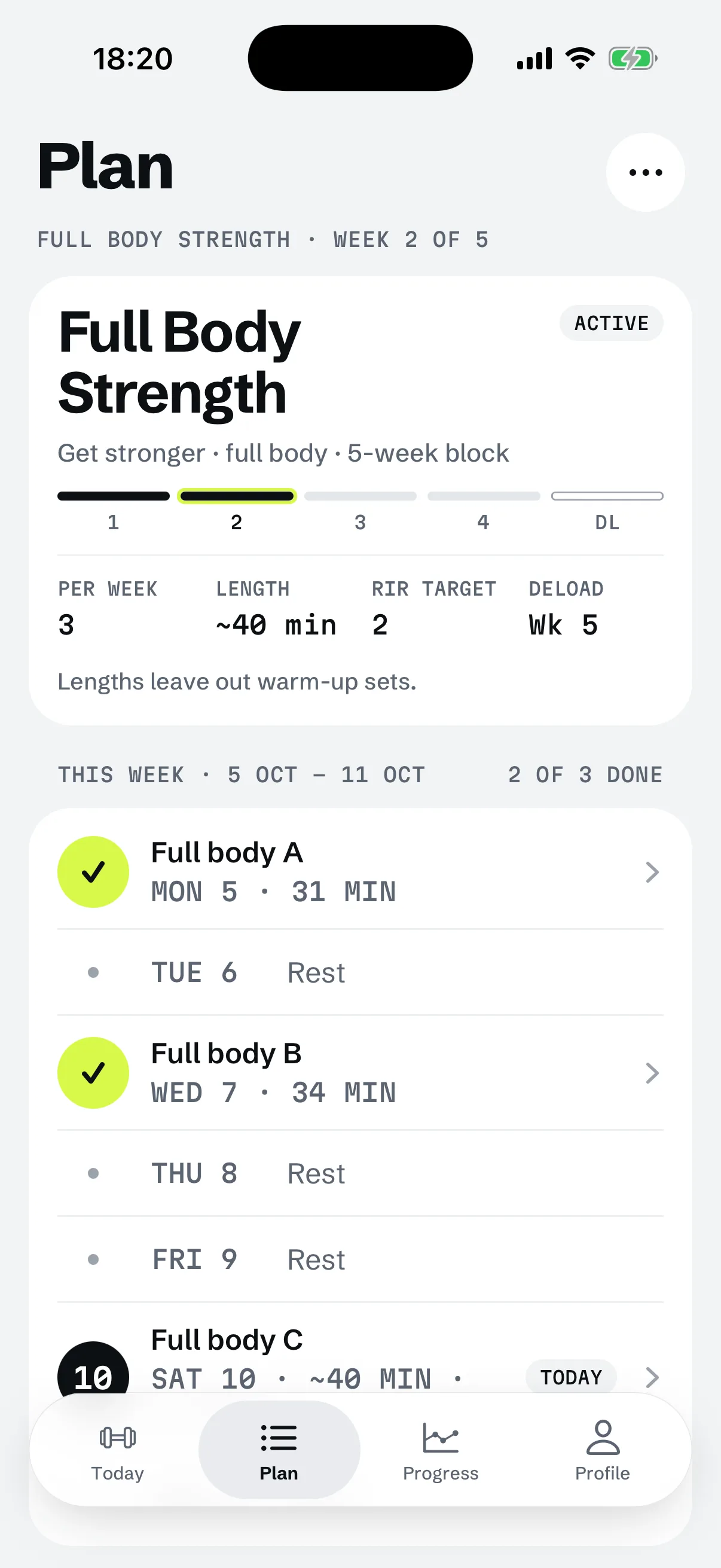
A 3 day full body program is built from exactly these rows: each workout opens with a squat or a hinge, then a press and a pull, and ends with isolation work.
RIGOR is a strength training app for iPhone that builds your plan and sets every weight by rules you can read.
YOUR IPHONE

How does RIGOR treat the two differently?
In five ways: the order, the number of sets, the rep range, the rest and the warm-up. The engine sets each from the exercise, not from a menu you fill in.
| Main compound | Other compound | Isolation | |
|---|---|---|---|
| Place in the workout | First | Next | Last |
| Working sets | 3 to 4 | 2 to 3 | 2 to 3 |
| Rest | 3:00 or 2:00 | 3:00 or 2:00 | 1:30 |
| Warm-up | Ramp | Ramp, unless warm | 60% × 8 |
The rep ranges depend on the goal and the slot. A small muscle is a calf, a side or rear delt, a forearm or the abs.
| Slot | Strength | Hypertrophy | Both |
|---|---|---|---|
| Main compound | 4–6 | 6–10 | 5–8 |
| Other compound | 6–8 | 8–12 | 8–12 |
| Isolation | 8–12 | 10–15 | 10–15 |
| Small-muscle isolation | 10–15 | 12–20 | 12–20 |
Rest follows the lift and then the rep range. Any exercise whose range tops out at 6 or fewer rests 3:00, which is why even an upper-body lift at 4 to 6 reps rests 3:00. The reasons are in rest between sets.
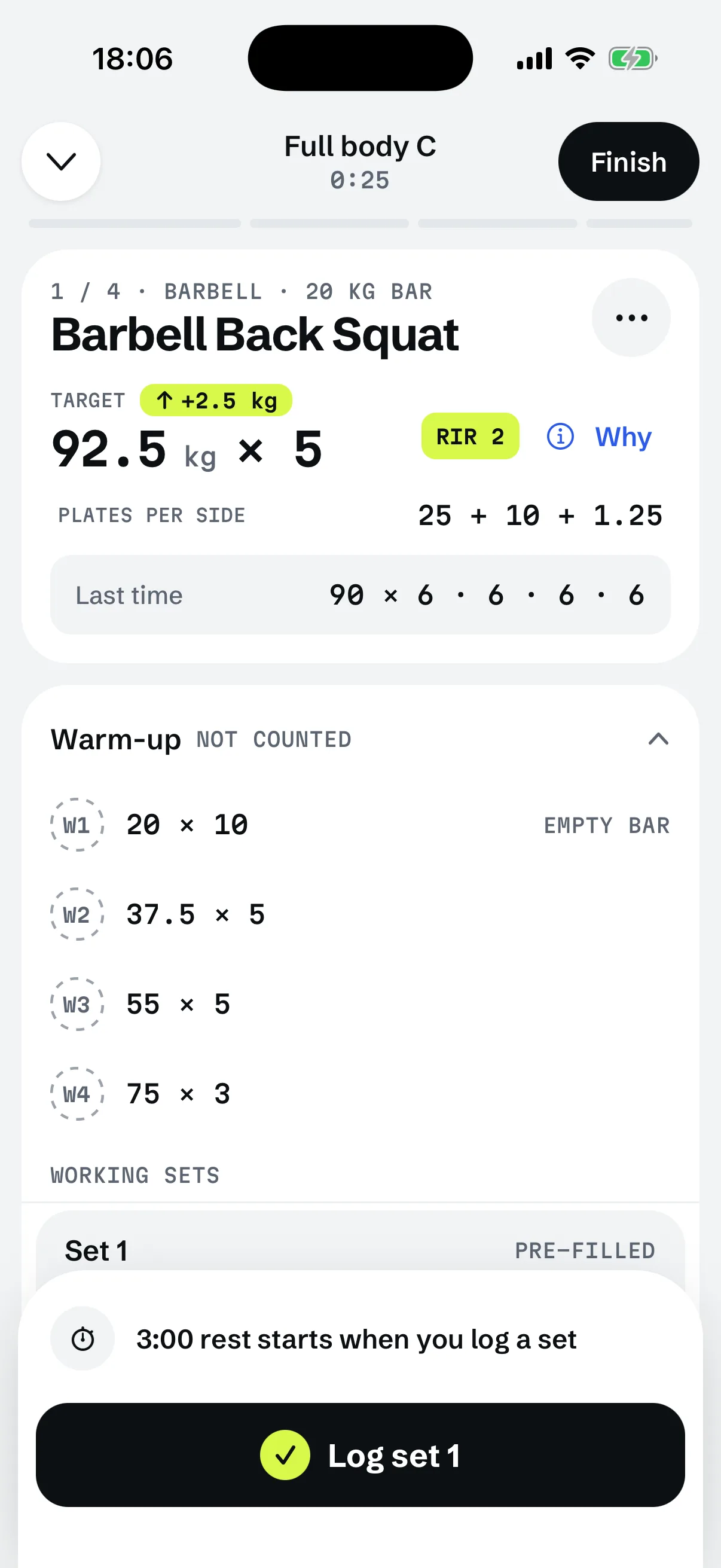
The warm-up follows the lift too. A compound ramps up from 40% of its working weight, and a barbell compound starts with the empty bar for 10 reps. A compound skips its ramp only when an earlier exercise trained the same movement; a barbell one then keeps a single set at 80% for 3 reps. An isolation exercise gets one set of 8 reps at 60% of its working weight, and none when one of its muscles is already warm. The warm-up sets calculator works out each step.
Compound vs isolation exercises for hypertrophy: what do studies find?
Similar whole-muscle growth, with one caveat about parts of a muscle. A 2023 meta-analysis pooled 7 randomized trials of healthy adults, 10 comparisons in all, and found a trivial difference between single-joint and multi-joint training. The result did not change with whether a trial combined both kinds against compounds alone, or with whether the volume was matched.
Two trials added isolation exercises to a compound program:
- In 20 trained men (two years of lifting or more), 8 weeks of compounds alone against compounds plus isolation gave no significant difference in any variable. Arm muscle circumference rose 1.33% without isolation work and 3.17% with it.
- In 29 untrained men, 10 weeks of lat pulldown and bench press, with or without elbow flexion and extension, grew the elbow flexors by 6.5% without the elbow work and 7.04% with it. The groups did not differ.
Those trials are small, short, and measured the arms, so they say little about the legs. A 2026 trial did compare them. Seventeen untrained adults trained one leg with knee extension and the other with leg press for 12 weeks, 5 sets twice a week, and an MRI measured the muscles. The whole quadriceps grew 7.1% with knee extension and 4.9% with leg press, which the authors call comparable. The rectus femoris grew 13.2% with knee extension and 1.1% with leg press. Leg press also grew the gluteus maximus by 15.4%, which knee extension did not.
So compounds grow most of a muscle, and an isolation exercise is worth its time for the part a compound leaves out. Nobody has shown that more isolation work builds more muscle overall.
How many compound and isolation exercises per workout?
Two to four compounds and up to three isolation exercises. Across the 13 workouts of RIGOR's 3 day full body, 4 day upper lower and 6 day push pull legs programs, sorting each exercise by its default rest, five workouts hold four compounds, five hold three and three hold two. Two hold no isolation exercise, three hold one, six hold two and two hold three. Ab exercises are counted apart.
RIGOR shapes this around the muscles. In a hypertrophy or a "both" plan it aims for at least 2 direct sets a week for each of biceps, triceps, calves and abs, as far as session time and the gym's exercises allow. The compounds are fitted to the session length first, and the 2 direct sets for a minor muscle are added afterwards, on the day with the most room. When a day runs over, the builder cuts sets from deprioritised muscles first, then from minor muscles, then evenly across exercises, never below 2 sets each. A short session keeps its compounds; the minor-muscle sets are what give way.
What is the correct order of exercises?
Compounds before isolation, with the day's main compound first. The American College of Sports Medicine's 2009 guidance reads "large before small muscle group exercises, multiple-joint exercises before single-joint exercises". RIGOR puts the day's first compound at the top as its main compound, then the other compounds, then the isolation exercises.
Lower A of the 4 day upper lower split, worked through
The Lower A workout of the 4 day plan holds two compounds and two isolation exercises.
| Exercise | Kind | Sets × reps | Rest | Warm-up |
|---|---|---|---|---|
| Leg Press | Main compound | 4 × 5–8 | 3:00 | Ramp |
| Dumbbell Romanian Deadlift | Compound | 2 × 8–12 | 3:00 | Ramp |
| Standing Calf Raise | Isolation | 3 × 12–20 | 1:30 | 60% × 8 |
| Seated Calf Raise | Isolation | 3 × 12–20 | 1:30 | 60% × 8 |
Half the sets are compound, and they take 18 of the 25½ minutes of rest. Each exercise then moves by double progression: add reps until every set reaches the top of the range, then add weight.
The warm-up sets sit above the working sets, listed apart, and never count toward your sets, records or progress.
When do these rules not apply?
For bodyweight and timed exercises, and whenever you choose otherwise.
RELATED TOOLWarm-up calculatorWarm-up sets from your first working weight.RIGOR sets each kind for you
Questions
What does compound lift mean?
A lift that moves two or more joints and trains several muscles at once, such as a squat, a bench press or a row. An isolation lift moves one joint and aims at one muscle, such as a curl or a calf raise.
How many of each should a workout have?
In RIGOR's four published programs, a workout holds 2 to 4 compound exercises and 0 to 3 isolation exercises, with ab work counted apart. The main compound gets 3 or 4 sets, every other exercise 2 or 3.
In what order should I do the two kinds?
Compounds first, isolation after. The American College of Sports Medicine's 2009 guidance says to do large muscle group exercises before small ones, and multiple-joint exercises before single-joint ones. RIGOR orders every workout that way.
Do I need isolation exercises at all?
For whole-muscle growth the trials find little difference when they are added. They help where a compound under-trains a muscle: in one 12-week trial, leg press barely grew the rectus femoris while knee extension grew it 13.2%.
How long should I rest after each kind?
RIGOR rests 3:00 after a lower-body compound, 2:00 after an upper-body compound, 1:30 after an isolation exercise and 1:00 after an ab exercise. Any exercise with a rep range topping out at 6 or fewer rests 3:00.
Do I warm up the same way for both?
No. A compound gets a ramp of 40%, 60% and 80% of the working weight, a barbell one starting from the empty bar. An isolation exercise gets one set of 8 reps at 60%, or none if its muscle is already warm.